

Skunk Works hiring a U-2 Pilot
Lockheed Martin Skunk Works is looking for a U-2 “Dragonlady” pilot.
According to the job announcement available on the company website, as the U-2 Pilot – Skunk Works you will be responsible for testing and operating advanced aircraft to validate performance and support mission readiness.
Your responsibilities will include:
- Conducting flight tests to verify aircraft compliance with specifications and operational suitability.
- Operating test aircraft during engineering flight tests, production acceptance, and flight test support.
- Coordinating flight operations efforts and collaborating with engineering teams.
- Approving cockpit configurations and ensuring safety standards are met.
- Performing demonstration flights for customers, government officials, and other stakeholders to exhibit aircraft performance, flying qualities and system capabilities.
The job position is in Palmdale, CA and the applicant must be a US Citizen – This position is located at a facility that requires special access. The selected candidate must possess an active Top Secret clearance to start.
aeroflightops
Basic Qualifications:
- No greater than 2 years outside of qualification on the U-2S Dragonlady.
- Current FAA Class I or II medical certificate.
- Suitable FAA Commercial Pilot (ME Land, Instrument Airplane) or Airline Transport Pilot certificate.
- Must be willing to travel and have a valid U.S. passport
- TOP SECRET security clearance
Desired Skills:
- 1,000 hours first pilot time.
- Graduate of a formal Test Pilot School.
- Experience in all flight test disciplines to include weapons, avionics, and flight sciences.
- Instructor/training experience a plus.
- Strong communication and organizational skills.
- Program Management/Leadership Integration
The application window will close in 90 days; applicants are encouraged to apply within 5 – 30 days of the requisition posting date in order to receive optimal consideration.
The Dragonlady
Built in complete secrecy by Kelly Johnson and the Lockheed Skunk Works, the original U-2A first flew in August 1955. Early flights over the Soviet Union in the late 1950s provided the president and other U.S. decision makers with key intelligence on Soviet military capability. In October 1962, the U-2 photographed the buildup of Soviet offensive nuclear missiles in Cuba, touching off the Cuban Missile Crisis. In more recent times, the U-2 has provided intelligence during operations in Korea, the Balkans, Afghanistan, and Iraq. When requested, the U-2 also provides peacetime reconnaissance in support of disaster relief from floods, earthquakes, and forest fires as well as search and rescue operations.
The U-2R, first flown in 1967, was 40 percent larger and more capable than the original aircraft. A tactical reconnaissance version, the TR-1A, first flew in August 1981 and was structurally identical to the U-2R. The last U-2 and TR-1 aircraft were delivered in October 1989; in 1992 all TR-1s and U-2s were designated as U-2Rs. Since 1994, $1.7 billion has been invested to modernize the U-2 airframe and sensors. These upgrades also included the transition to the GE F118-101 engine which resulted in the re-designation of all Air Force U-2 aircraft to the U-2S.
U-2s are home based at the 9th Reconnaissance Wing, Beale Air Force Base, California, but are rotated to operational detachments worldwide. U-2 pilots are trained at Beale using five two-seat aircraft designated as TU-2S before deploying for operational missions.
Pushing the boundaries of what’s possible
The one and only Lockheed Martin Skunk Works has a 82-year track record developing aircraft systems that push the boundaries of what’s possible. Trusted to solve critical national needs for our warfighters’, the Skunk Works never shies away from seemingly unsolvable challenges and has a reputation for solving hard problems quickly, quietly and affordably.
In June 1943, the US Army’s Air Tactical Service Command (ATSC) met with Lockheed Aircraft Corporation to express its dire need for a jet fighter to counter a rapidly growing German jet threat.
One month later, a young engineer named Clarence “Kelly” L. Johnson and his hand-picked team of engineers and mechanics delivered the XP-80 Shooting Star jet fighter proposal to the ATSC. Shortly after, the go-ahead was given for Lockheed to start developing the United States’ first jet fighter. This project marked the birth of what would become the Skunk Works, with founder Kelly Johnson at its helm.
The formal contract for the XP-80 didn’t arrive at Lockheed until Oct. 16, 1943, four months after work had already begun. This would prove to be a common practice within the Skunk Works. A customer would go to the Skunk Works with a request, and on a handshake the project would begin – no contracts in place, no official submittal process.
Kelly Johnson and his team designed and built the XP-80 in only 143 days, seven less than was required.
It was Kelly’s unconventional organizational approach that allowed the Skunk Works to streamline work and operate with unparalleled efficiency. He challenged the bureaucratic system that stifled innovation and hindered progress.
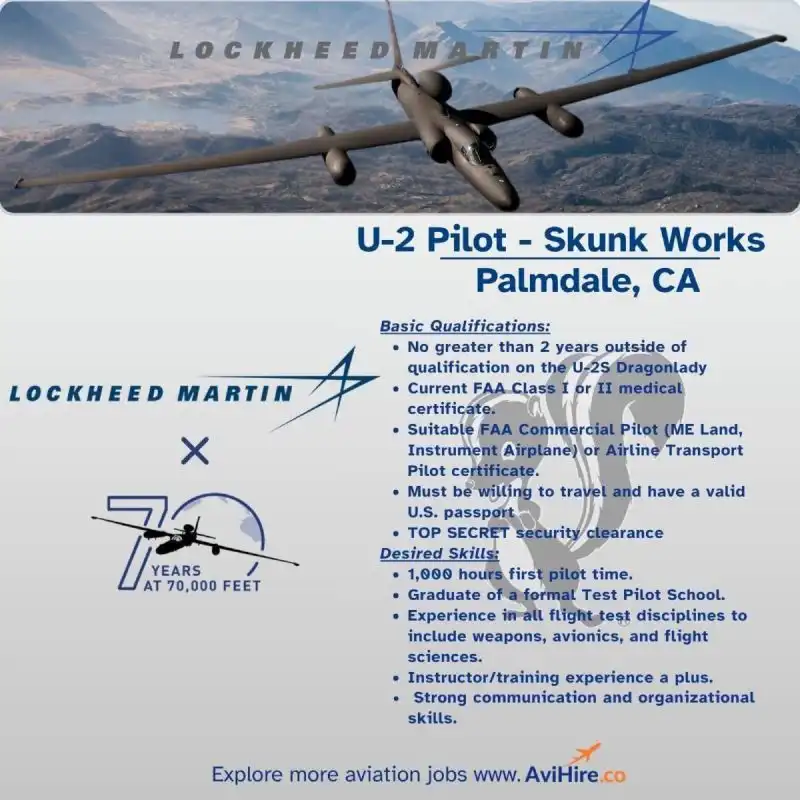
Photo credit: John Schwab / U.S. Air Force and Lockheed Martin
Leave a Reply