

“Fighting Saints”
Even if Fighter Composite Squadron (VFC) 13 “Fighting Saints” origins can be traced back to 1946, when VF-753 was commissioned flying F6F-5 Hellcats, today’s squadron was born on Sept. 1, 1973, at Naval Air Station (NAS) New Orleans during the reorganization of the US Naval Reserve.
The unit was initially equipped with the Chance Vought F-8H Crusader which traded in Apr. 1974 for the single-seat A-4L Skyhawk.
The Saints were permanently transferred to NAS Miramar in Feb. 1976 because of the increased demand for west coast adversary services and other fleet support missions. That summer the squadron transitioned to the more reliable two-seat TA-4J.
However VFC-13 returned to single seat aircraft in 1983 with the arrival of the A-4E.
In Oct. 1993 VFC-13 made the transition to the single-seat, two engine F/A-18 Hornet which enhanced the squadron’s ability to perform its adversary mission by providing an even more capable and realistic threat aircraft.
VFC-13 F-16C Fighting Falcons
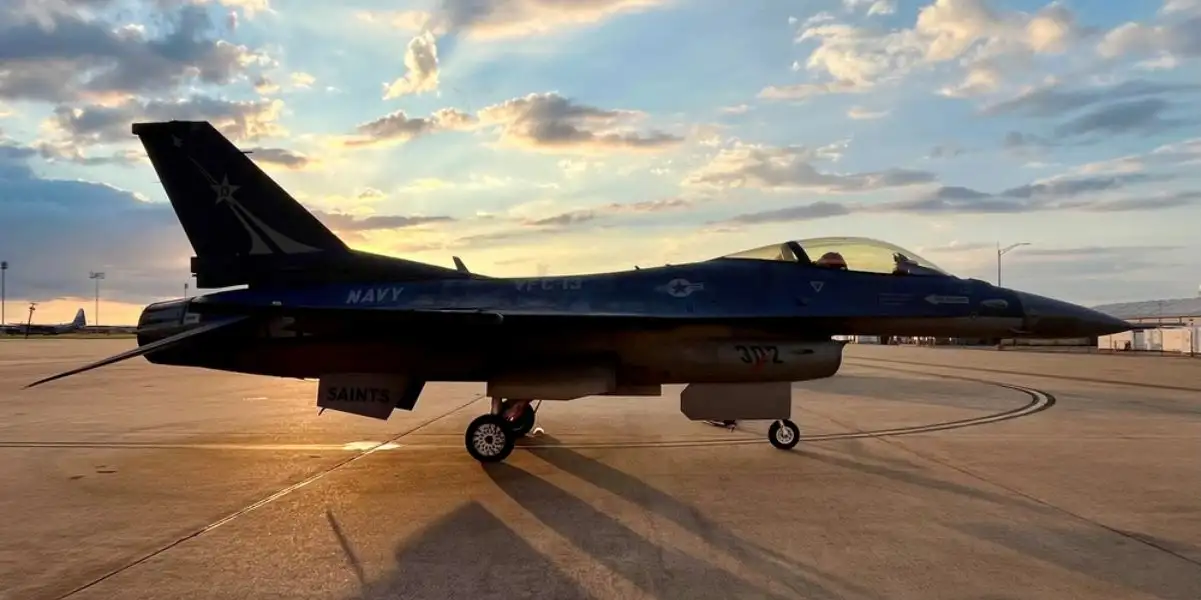
Naval Aviation Warfighting Development Center (NAWDC) or “Naw-Dik,” has been home to VFC-13 Fighting Saints since the move was made from Miramar to NAS Fallon in 1996. During the air station move, VFC-13 took over the adversary mission from VFA-45 and VFA-127. Simultaneous to the move, the Fighting Saints transitioned to the Northrop F-5E Tiger Il, and from December 2022, the squadron is now flying F-16C Block 32 Fighting Falcons.
As told by Jim Dunn & Nicholas A. Veronico in their book High Desert Deployment: Navy Color on Display at NAS Fallon, the F-16s received by VFC-13 are all ex-Arizona Air National Guard aircraft. The F-5Es are today flying with VFC-204 “River Rattlers” based at Naval Air Station/Joint Reserve Base New Orleans, Louisiana.
The US Navy received a total of 20 single-seat Block 32 F-16Cs and 6 two-seat Block 25 F-16Ds.
Next to the Saints, NAWDC received eight F-16C Block 32s and six F-16D Block 25s to replace its remaining legacy F/A-18 Hornets, which will be withdrawn from use.
Better adversaries require increased training and combat readiness of US forces. Moving to the F-16C Block 32 enables the Fighting Saints to provide an increasingly realistic threat to Navy and Marine Corps air crews The F-16s supply a threat capable of engaging or entering the battlespace at altitudes above 50,000ft, can fly at more than 800 knots (920.6mph) and maneuver at more than 9 Gs.
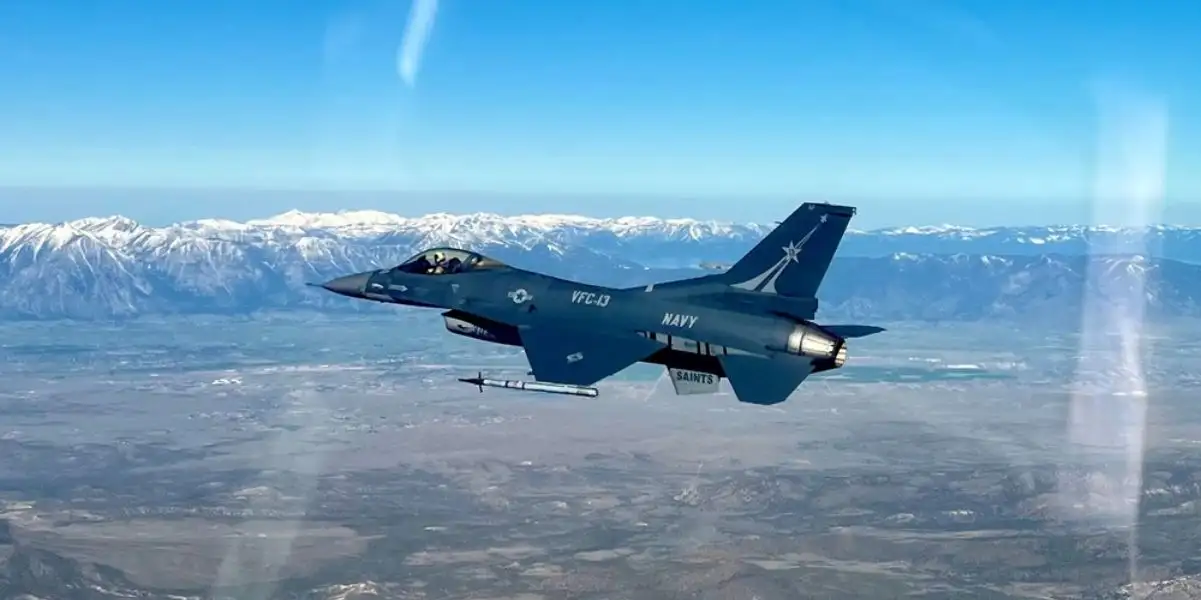
The highest quality adversary training
The ex-Air National Guard F-16s have been upgraded during their service in Arizona with the Center Display Unit, the Scorpion Helmet Mounted Display, Northrop Grumman’s Litening advanced targeting pod and the AN/APG-83 Scalable Agile Beam Radar-Active Electronically Scanned Array radar. In the cockpit, the center display unit, with its six-by-eight-inch display, displays greater detail and information from both the Litening pod and the radar.
Thanks to this unique mix of aircraft, VFC-13 provides the highest quality adversary training for regular Navy fleet and replacement squadrons and air wings, reserve fighter and attack squadrons, USAF and USMC units.
High Desert Deployment: Navy Color on Display at NAS Fallon is published by Key Publishing and is available to order here.

Photo credit: U.S. Navy
Leave a Reply